
A walk through the monumental heart of imperial Rome, from the Flavian Amphitheatre along the Imperial Fora to the Capitoline Hill, where the conference social dinner awaits.
Meeting point
Metro Colosseo
Duration
~1.5-2 hours
Distance
~2.5 km
Arrival
Piazza del Campidoglio
Thursday, September 3, 2026 - afternoon (exact time to be confirmed). The walk is open to all registered participants; no booking is required.
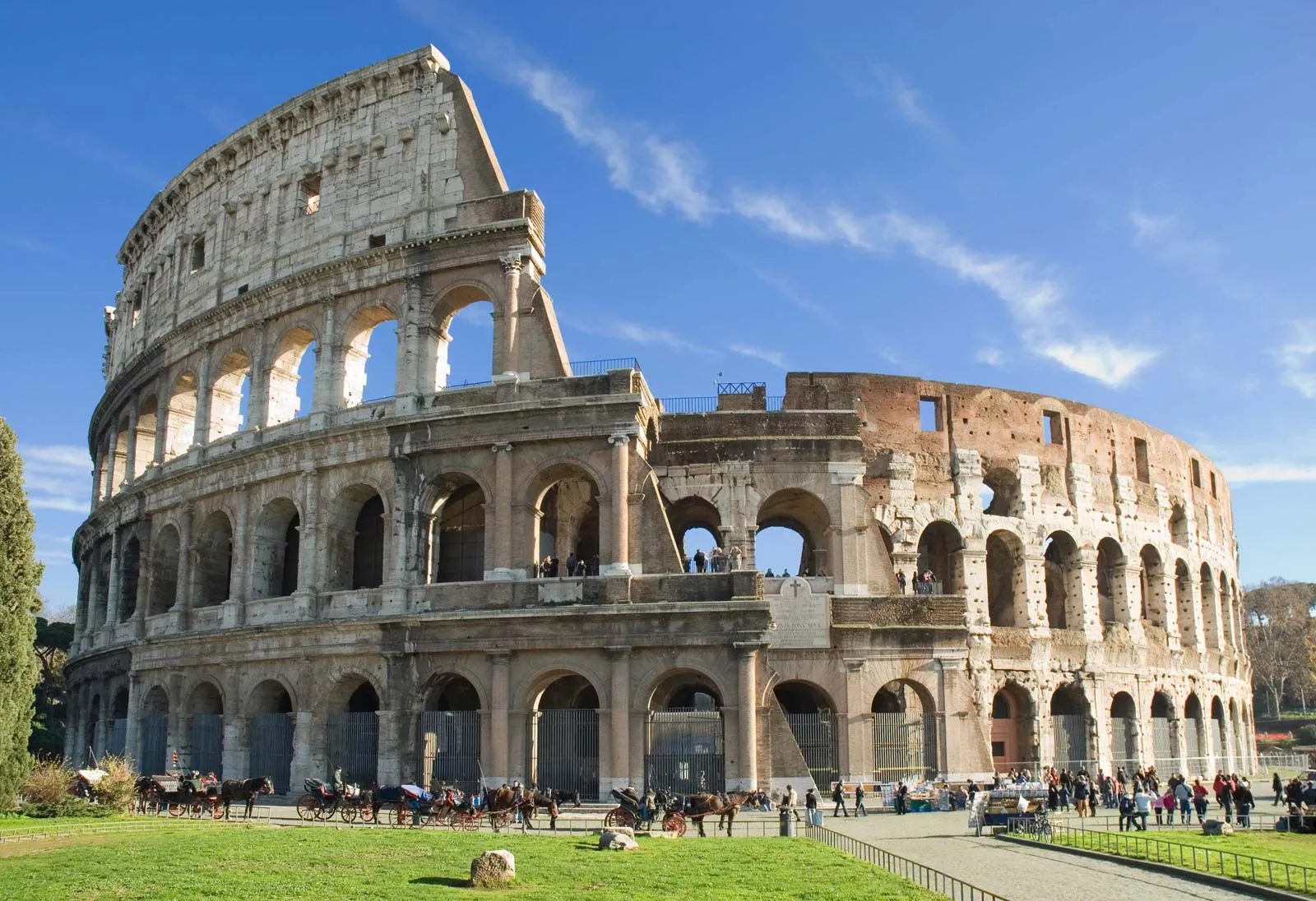
The Colosseum
The largest amphitheatre ever built, the Colosseum was commissioned by Emperor Vespasian around 70 AD and inaugurated by his son Titus in 80 AD with a hundred days of games. Originally known as the Flavian Amphitheatre, it could seat between 50,000 and 80,000 spectators.
The building's innovative system of barrel and groin vaults allowed the construction of a freestanding structure 48 metres high. Despite centuries of earthquakes, fires, and use as a quarry, roughly one third of the original structure survives.
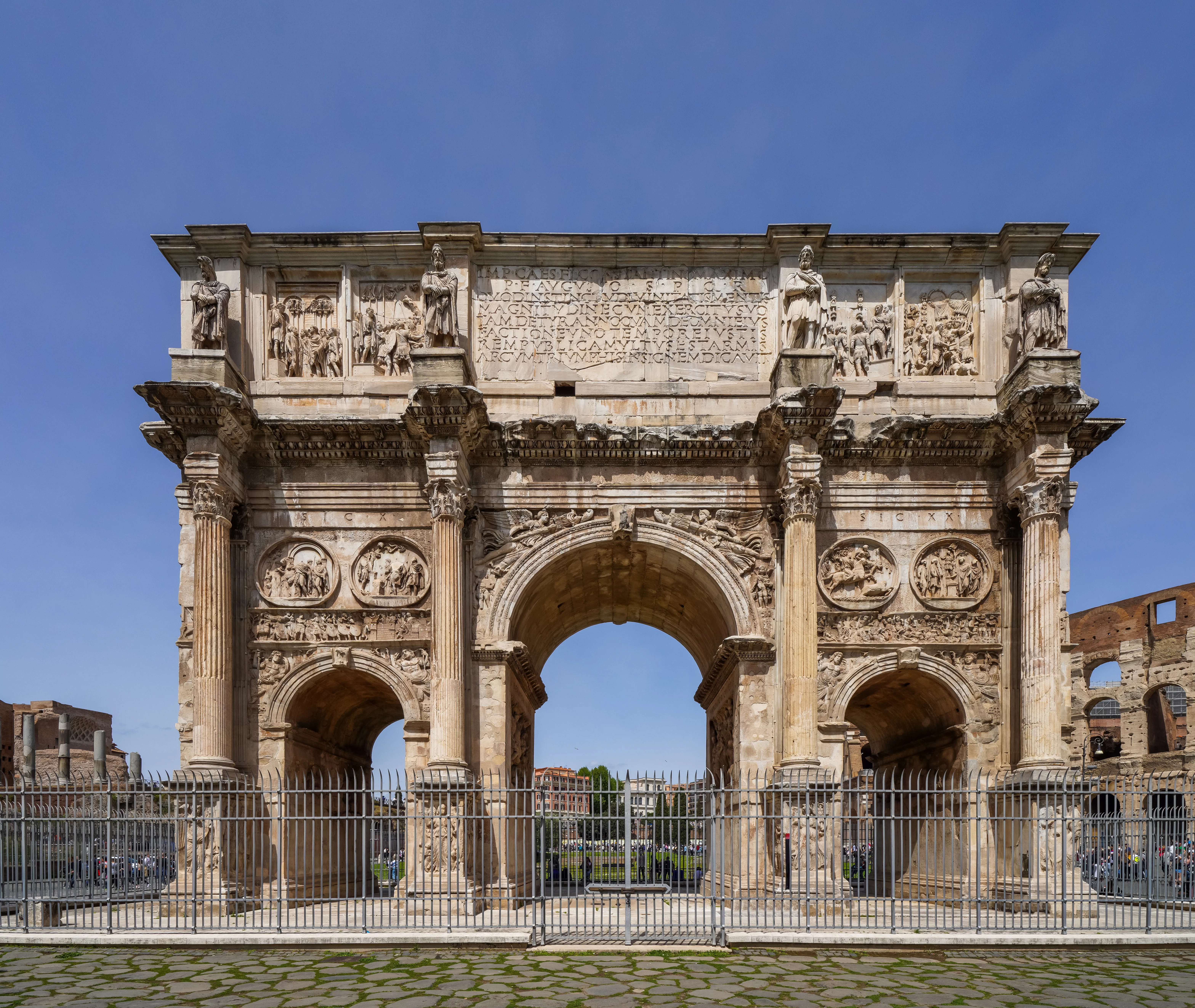
Arch of Constantine
Standing just a few steps from the Colosseum, the Arch of Constantine is the largest surviving triumphal arch in Rome, erected in 315 AD to commemorate Constantine's victory at the Battle of the Milvian Bridge.
The arch is notable for its extensive reuse of sculptural elements from earlier monuments dedicated to Trajan, Hadrian, and Marcus Aurelius, offering an extraordinary visual summary of Roman imperial art across centuries.
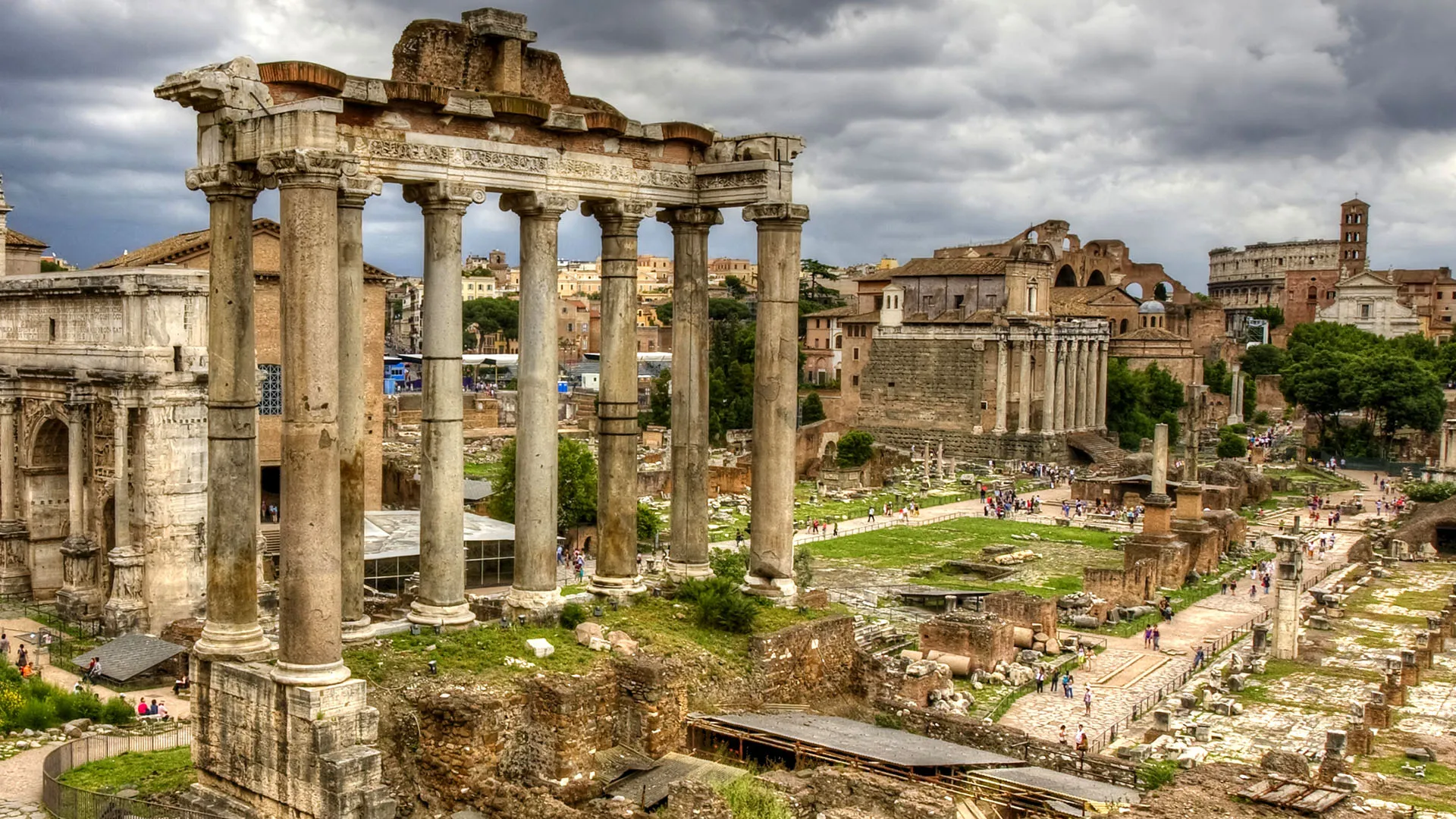
The Roman Forum
For nearly a thousand years, the Roman Forum was the political, religious, and commercial center of the Roman world, home to temples, basilicas, and the public spaces where senators debated and triumphal processions passed.
Once a marshy valley between the Palatine and Capitoline hills, it was drained by the Cloaca Maxima, one of the earliest sewage systems in the world, and transformed into the beating heart of the Republic and then the Empire.
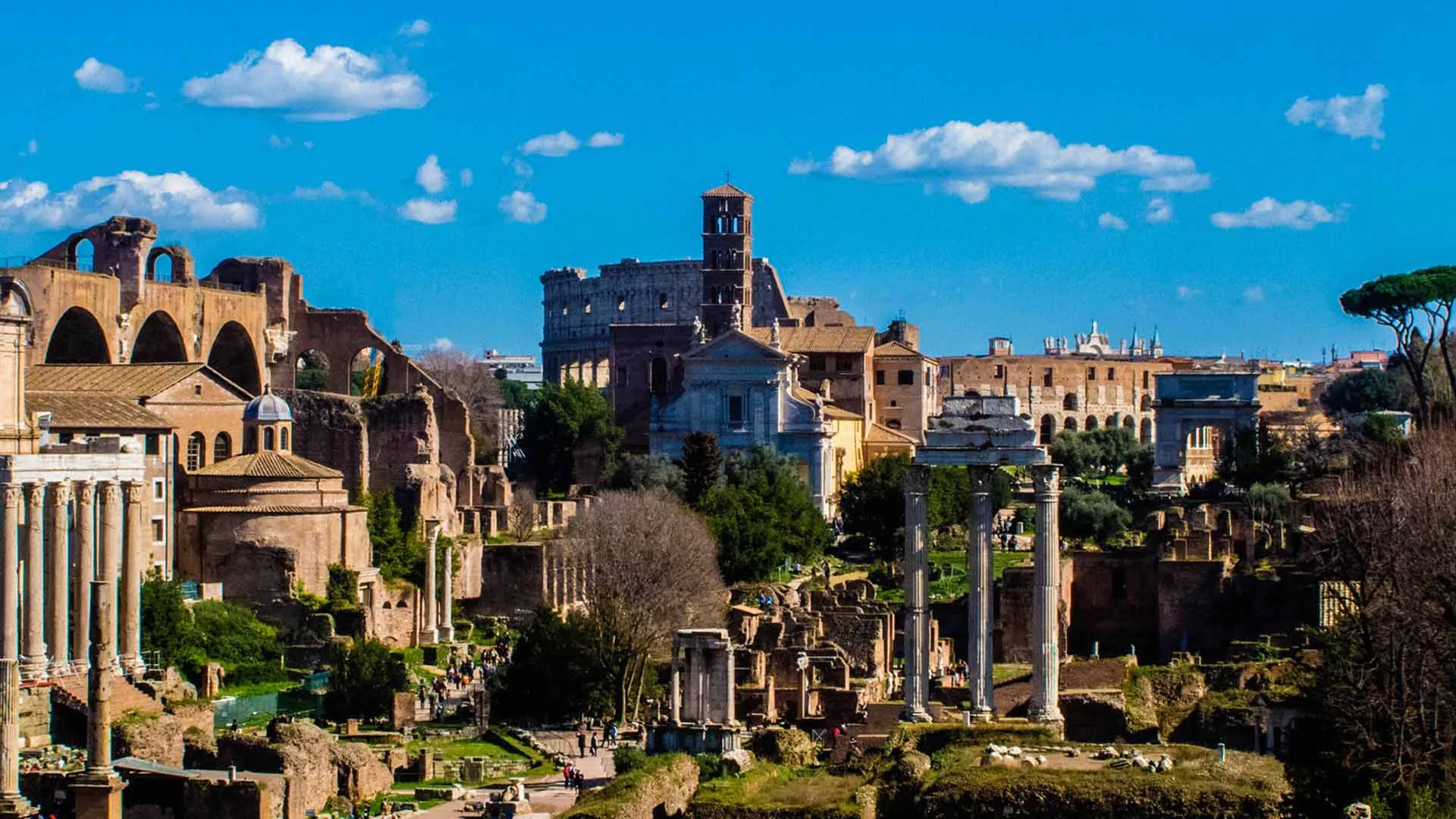
The Imperial Fora
As Rome's ambitions grew, the original Forum became too small. Between the 1st century BC and the 2nd century AD, five emperors built their own monumental squares alongside it: the Fora of Caesar, Augustus, Nerva, Vespasian, and Trajan.
Walking along Via dei Fori Imperiali, you pass the remains of these grand complexes. Major archaeological excavations continue to this day, uncovering layers of the ancient city beneath the modern street.
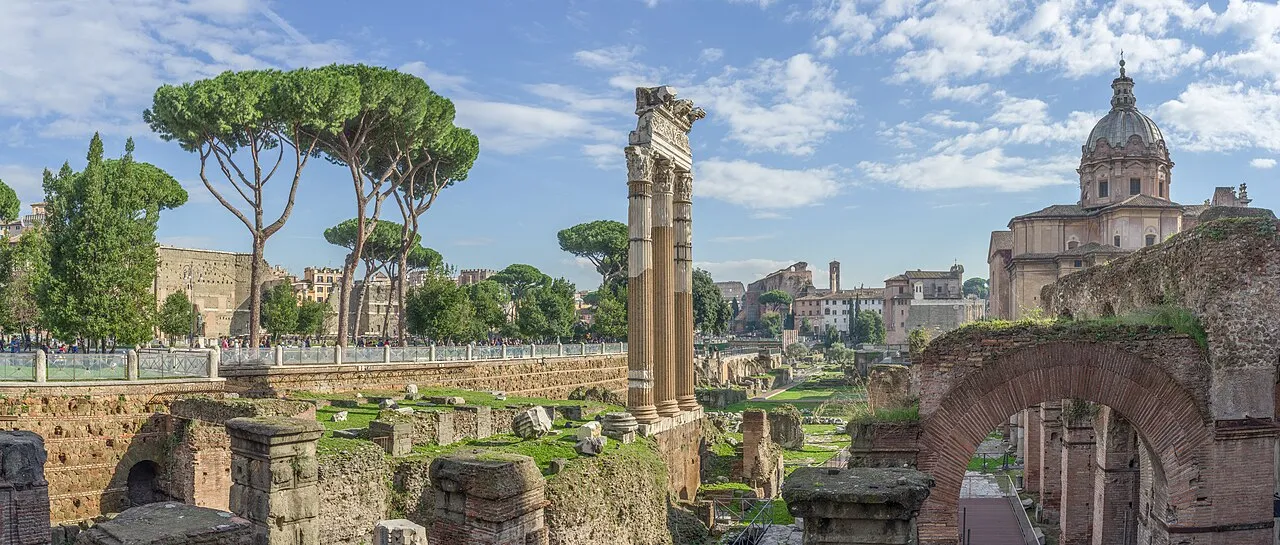
Forum of Julius Caesar
The first of the Imperial Fora, this square was commissioned by Julius Caesar and inaugurated in 46 BC, partly financed with the spoils of his Gallic Wars. At its center stood the Temple of Venus Genetrix.
Three of the temple's columns, re-erected in the 20th century, are visible today. The forum set the template for all the Imperial Fora that followed, an expression of personal and political ambition made monumental.
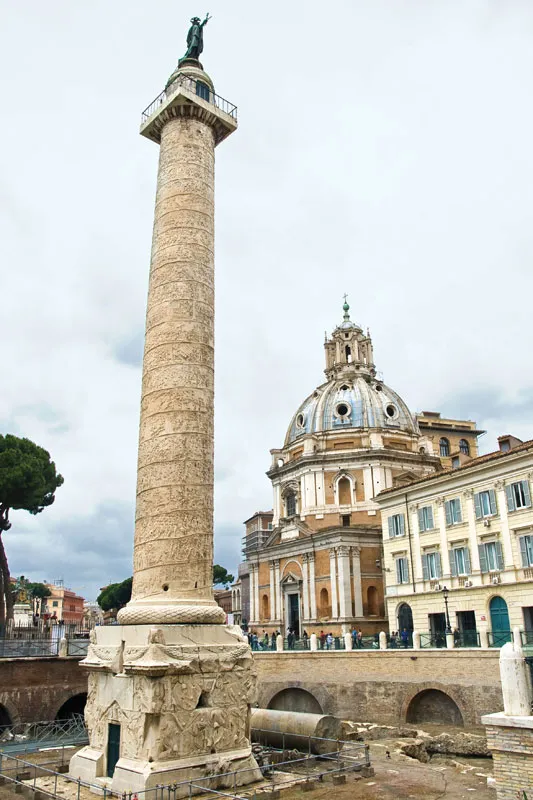
Trajan's Column
Rising 30 metres above the Forum of Trajan, this marble column was completed in 113 AD. A continuous spiral frieze, over 200 metres long, winds around it 23 times, depicting Trajan's campaigns in Dacia in extraordinary detail.
The relief contains more than 2,600 figures and is one of the most important sources on the Roman army. Originally topped by a statue of Trajan, the column has been crowned since 1587 by a statue of Saint Peter.
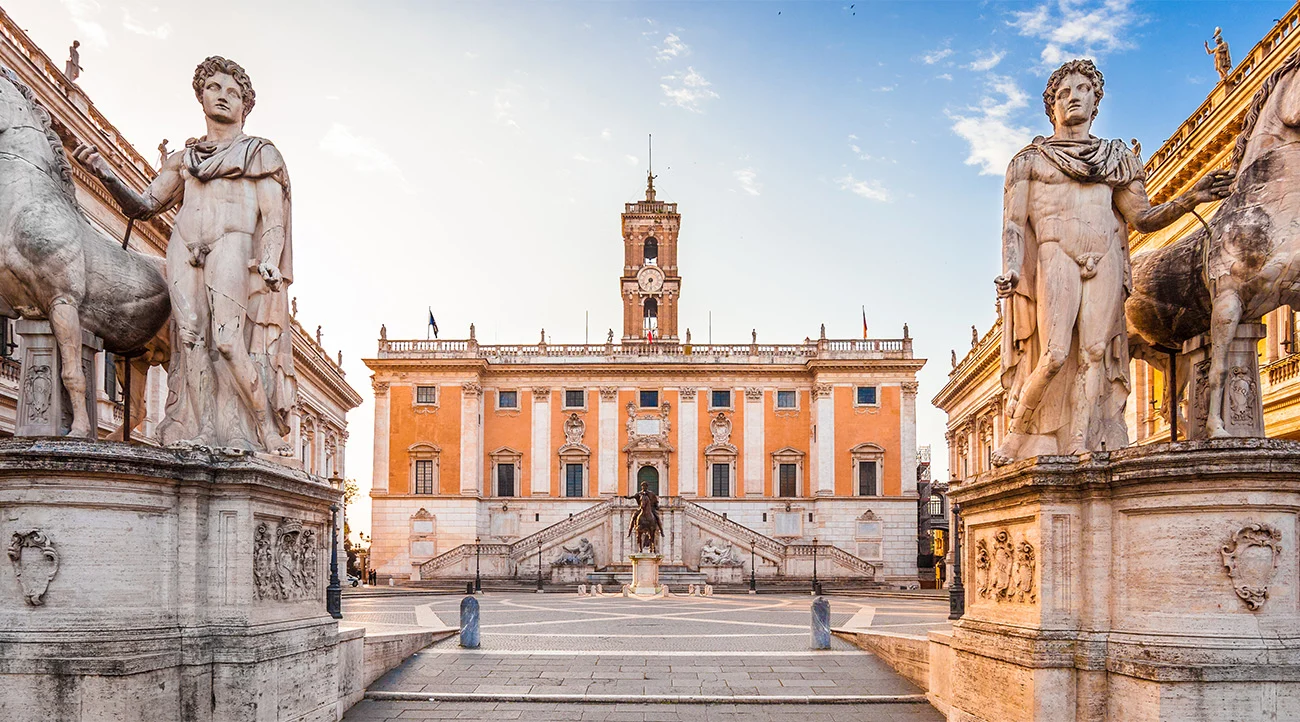
Piazza del Campidoglio
The walk ends on the Capitoline Hill, the smallest but most sacred of Rome's seven hills. Piazza del Campidoglio was redesigned by Michelangelo in 1536, one of the earliest examples of Renaissance urban planning.
The square is framed by three palaces, home to the Capitoline Museums, the oldest public museum collection in the world (founded in 1471). From the terrace behind Palazzo Senatorio, you can take in one of the finest views of the Roman Forum and the city beyond.
The conference social dinner awaits at Terrazza Caffarelli, within the Capitoline Museums complex, overlooking the rooftops of Rome.
Prefer a different route? Explore Itinerary 2: From Circus Maximus to the Capitoline Hill